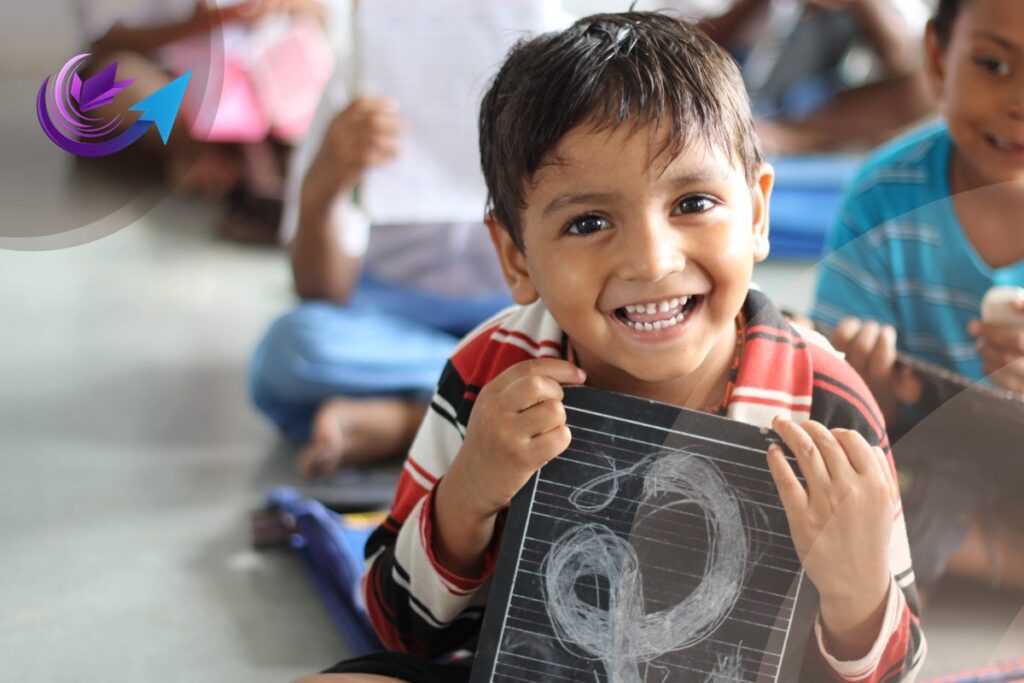
You feel it immediately when you enter the building.
The atmosphere buzzes with quiet energy. Students greet each other respectfully across cultural lines. Teachers collaborate effortlessly, not because they must but because they want to.
That intangible feeling? It’s what transforms average schools into exceptional ones.
At EduVision LLC Consultancy, we’ve partnered with international schools across four continents.
We’ve seen one truth emerge amidst the noise over the years: a positive international school culture separates thriving institutions from struggling ones.
It makes all the difference between staff who comply and those who commit. Between reactive problem-solving and proactive excellence.
According to McKinsey’s 2023 education research, schools with intentionally cultivated cultures report 34% higher teacher retention rates. More importantly, there was also an observably sustained improvement in student well-being and academic outcomes.
School culture isn’t merely about motivational posters or mission statements. It’s a representation of how people treat each other daily. How leadership communicates during a crisis. How success gets celebrated and failure gets addressed.
In today’s competitive K-12 international education landscape, culture is your quiet advantage—the invisible force driving lasting success.
This guide reveals exactly how to build it.
The Complexity of Culture in International Schools

Creating positives in any school culture challenges the institution. For international schools, that complexity multiplies exponentially.
For instance, you’re managing constant community flux. Students arrive from Shanghai, Nairobi, and São Paulo. Teachers bring Western individualistic frameworks. Parents expect Asian collective values or Middle Eastern hierarchical structures.
We call this cultural layering at EduVision.
Multiple expectation systems overlap within one institution. Without intentional management, these differences breed misunderstanding.
Worse still, they create a quiet resentment that erodes the community.
We’ve worked with school leaders from Dubai to Singapore. They ask similar questions:
How do we balance rigorous academics with emotional safety? Can we represent every cultural group without losing institutional identity? How do we unify staff when turnover introduces new philosophies annually?
These aren’t operational questions. They’re cultural ones.
The answer always begins with clarity.
Foundation First: What Defines a Positive School Culture
Before implementing programs, culture requires alignment. EduVision helps leaders establish coherence across three foundational areas: values, behaviors, and systems.
Values That Live Beyond Paper
Most schools define values once. They print them in glossy brochures. Then they never revisit them.
Real positive international school culture emerges when values get revisited. Debated. Reinterpreted through changing contexts.
Consider an international school in Kuala Lumpur. Their stated values were “Respect, Resilience, and Responsibility.” Beautiful words. Yet teachers found them meaningless in daily practice.
Through EduVision’s facilitated workshops, each department translated abstract values into concrete actions. “Respect” became listening without interruption. “Resilience” meant learning from feedback constructively. “Responsibility” meant owning collective classroom outcomes.
Once values became visible behaviors, engagement transformed. Student participation improved measurably within one semester.
Behaviors That Reinforce Belonging
Leadership behavioral modeling is non-negotiable. Culture collapses when values apply to everyone except those at the top.
When school leaders model openness and accountability, it cascades downward. According to UNESCO’s 2023 Global Education Monitoring Report, leadership consistency ranks among the top three factors influencing teacher satisfaction in international contexts.
EduVision consultants remind boards and principals: Culture is caught, not taught. Teachers observe how leaders speak to staff. Students watch how administrators address mistakes. Parents notice how leadership responds under stress.
Every tone and gesture either strengthens or fractures culture.
Systems That Sustain the Vision

Strong values and behaviors need supporting systems. Otherwise, they remain aspirational.
We’ve guided schools in embedding cultural alignment into recruitment processes. Performance reviews. Professional development frameworks.
When “fit” means more than credentials—when it includes empathy and teamwork—you hire cultural ambassadors, not just teachers.
A positive international school culture isn’t accidental. It’s engineered with intention and lived with consistency.
The following strategies emerge from EduVision’s direct work with K-12 international schools worldwide.
These aren’t theoretical concepts or generic checklists. They’re proven pathways we’ve implemented across diverse contexts. Stretching their impact from Southeast Asia to Europe to the Middle East.
Each strategy interconnects with the others, creating a comprehensive approach to building a positive international school culture. Let’s explore how to put them into action at your school.
Step 1: Establish Clear, Inclusive Values
The strongest cultures emerge from shared ownership. Top-down value statements rarely reflect daily realities.
When EduVision facilitated a strategic culture review in Dubai, we invited input broadly. Students, parents, teachers, alumni—everyone contributed.
The school uncovered a critical disconnect.
Leadership emphasized “academic excellence.” But students and staff most valued “collaboration” and “care.” That gap had quietly eroded trust.
The community-driven values didn’t erase academic ambition. They reframed it: “Excellence through empathy. Innovation through collaboration.”
The change felt authentic because everyone built it. Not imposed from above.
Leaders who involve their community in defining values don’t just build buy-in. They build belief.
Here’s the reality: inclusive value creation takes time. But that investment pays exponential returns in commitment and coherence.
Step 2: Strengthen Community Through Restorative Practices
Discipline reveals culture’s true nature. Schools prioritizing punishment send one message. Schools prioritizing restoration send another.
EduVision has found that international schools adopting restorative frameworks see marked improvements. Both in discipline and belonging.
Traditional discipline asks: “What rule was broken?” Restorative practices ask: “Who was affected? How can we repair harm?”
At a partner school in Kenya, after-school detentions were replaced. Student-led reflection circles took their place.
Initial skepticism existed. But the practice soon became foundational to the school’s ethos. Students felt heard. Teachers felt supported.
Repeated misbehavior incidents dropped 40% within one year.
Restorative practices don’t weaken discipline. They strengthen accountability through empathy. They teach students to resolve conflicts with dignity. To see mistakes as growth opportunities.
This approach is particularly powerful in international contexts. Where students navigate multiple cultural expectations around conflict and authority.
Step 3: Embed Social-Emotional Learning Across the Curriculum
SEL isn’t an elective. It’s the foundation of every thriving international school community.
Students in these environments face unique challenges. Frequent transitions. Cultural adjustments. Identity questions across multiple contexts.
EduVision consultants emphasize embedding SEL within all subjects. Not just advisory programs.
At a high-performing school in Thailand, science classes explored “emotional resilience in experimentation.” Literature discussions included “cross-cultural empathy in storytelling.”
Teachers reported improved student relationships. More surprisingly, they saw enhanced academic engagement.
A positive international school culture grows when emotions are intelligently managed, not ignored.
As one EduVision client in Europe noted: “We no longer treat SEL as soft skills. They’re our school’s survival skills.”
The bottom line is this: academic excellence and emotional intelligence aren’t competing priorities. They’re complementary necessities.
Step 4: Celebrate Traditions That Build Pride and Belonging

Traditions are powerful culture carriers. But in international schools, traditions must evolve.
They must reflect diversity, not dominance.
At a Singapore campus supported by EduVision, leadership introduced an annual “Festival of Voices.” This replaced the single cultural week that previously centered on one nationality.
Each grade presented artistic expressions from students’ backgrounds. Music, poetry, dance, storytelling.
What emerged wasn’t chaos. It was harmony—a collective celebration of difference that unified rather than divided.
Beyond major events, micro-traditions matter equally.
A Friday ‘gratitude huddle.’ Rotating leadership in assemblies. Peer-nominated kindness awards.
Each moment quietly reinforces that belonging is everyone’s responsibility. When families feel genuinely included in these traditions, strategic parent engagement transforms from a program into a partnership. The kind that keeps families enrolled and actively contributing to your school’s long-term success.
EduVision consultants often remind leaders: The most effective traditions empower participation, not performance.
When building a positive school culture, ask this question about every tradition: Does it create insiders and outsiders? Or does it expand the circle of belonging?
Step 5: Measure What You Can’t See
Culture feels intangible. But it leaves measurable fingerprints.
At EduVision, we encourage schools to monitor quantitative and qualitative indicators of cultural health.
Quantitative data includes:
- Staff turnover and retention trends
- Frequency of disciplinary incidents
- Student attendance and satisfaction scores
- Parental feedback on communication and trust
But qualitative insight is equally vital. How do teachers describe their workload? Can our students speak about fairness? How are conflicts resolved?
When EduVision worked with a large European campus, leadership tracked “tone of staffroom conversation.” Through anonymous feedback and listening circles.
Within months, morale improved. Absenteeism declined noticeably.
Metrics give culture direction. But stories give it meaning.
By combining both, schools gain a complete understanding of their environment. This dual approach prevents leaders from operating on assumptions rather than evidence.
Step 6: Sustain Culture Through Leadership Continuity
Even the strongest positive international school culture can falter during transitions. Departing heads often take institutional memory with them.
EduVision helps schools embed cultural continuity plans. These become part of leadership succession processes.
This involves codifying values, rituals, success indicators, and staff narratives. Into a “culture blueprint” shared with incoming leaders.
In Portugal, one EduVision partner school incorporated “culture continuity” into board policies. Every strategic decision now includes a simple question: How does this choice align with our cultural values?
That consistent reflection keeps the school centered. Even through inevitable changes.
Sustaining culture means institutionalizing humanity. It’s ensuring that systems protect what people have built.
Contrary to popular belief, culture doesn’t automatically survive leadership transitions. It survives when deliberately preserved.
The Core Truth: Leadership Shapes Everything
Every culture begins at the top. If leaders communicate clarity and consistency, culture thrives. If they waver or send mixed messages, it crumbles.
EduVision consultants often begin leadership retreats with this challenge: “Culture is not what you declare. It’s what you tolerate.”
If negativity goes unaddressed, it becomes the norm. Excluding or ignoring a case could define the environment. If inconsistency is accepted, the mission statement becomes meaningless.
In every successful international school we’ve advised—from Manila to Milan—the turning point was leadership accountability.
When leaders began modeling the values they demanded from others, everything changed. Teacher collaboration strengthened. Parents became allies. Students took pride in their environment.
Leadership isn’t about controlling culture. It’s about curating it.
And that curation requires daily attention. Not annual retreats or quarterly reviews.
As a consequence, the most effective school leaders make culture part of every conversation. Every decision. Every interaction.
Your Path Forward: Building Culture That Lasts
A positive international school culture doesn’t just make people feel good. It drives tangible success.
Schools with strong cultures see higher teacher retention. Deeper parent trust. Stronger student well-being. Consistently better academic performance.
At EduVision LLC Consultancy, we’ve witnessed that the most successful institutions don’t treat culture as a project. They treat it as a daily practice. A living promise renewed in every interaction.
Culture is the invisible advantage that makes good schools great. And great schools are unforgettable.
When your school’s culture is right, everything else aligns naturally. Curriculum. Accreditation. Marketing. Even finances.
Because when people feel they belong, they give their best. When they give their best, excellence follows.
And excellence, sustained by empathy, is what truly defines international education.
Ready to Transform Your School Culture?

Creating a positive international school culture requires strategic vision and practical expertise. EduVision LLC Consultancy has guided K-12 international schools across four continents through this transformation.
We don’t offer generic templates. We provide customized culture audits, leadership coaching, and implementation support tailored to your unique community.
Whether you’re facing high staff turnover, community disconnection, or preparing for a leadership transition, we can help you build a culture that lasts.
Schedule a complimentary consultation with our team. Let’s discuss how we can support your school’s cultural transformation. Because your community deserves more than good intentions—it deserves proven strategies that work.
Contact EduVision today. Your school’s cultural transformation begins with a single conversation.
Conclusion
A positive, inclusive international school culture does more than make people feel good. It is pivotal to driving tangible success. Schools with strong cultures see higher teacher retention, deeper parent trust, stronger student well-being, and consistently better academic performance.
Most successful institutions don’t treat culture as a project or a policy. They treat it as a daily practice, a living promise renewed in every interaction.
Culture is the invisible advantage that makes good schools great and great schools unforgettable.
And when a school’s principal is right, everything else, from curriculum to accreditation, marketing, and even finances, aligns naturally.
When people feel like they belong to a cause, they give their best. And naturally, excellence follows. In the end, excellence sustained by empathy is what truly defines international education.ac
But qualitative insight is equally vital. How do teachers describe their workload? What do your students say about fairness? How are conflicts resolved?
When EduVision worked with a large European campus, leadership tracked “tone of staffroom conversation.” Through anonymous feedback and listening circles.