Quick answer: You can make your school stand out without changing your curriculum by changing how families experience you. Three methods work especially well: personal video in admissions, real parent testimonials and virtual open houses with live Q&A. Each one shows families your culture instead of just describing it.
In many cities, international and private school places have grown faster than demand. Families now have more choice, and they research online long before they visit. Word of mouth still matters most, but parents check several sources before they decide.
Most schools respond by adding programs. Often the better move is to communicate what you already do well. This guide covers three practical ways to do that.
Why does how you communicate matter as much as what you teach?
Parents rarely compare curricula line by line. They compare how a school makes them feel. Do they trust the leaders? Can they picture their child there? Do other families seem happy?
If your communication is generic, even an excellent program looks like everyone else's. Clear, warm and personal communication helps you stand out with the same curriculum. Our guide to school branding explains how to define what makes you different first.
1. How can personal video simplify admissions?

Many families, especially younger parents, expect visual and personal content. Long text emails and PDF brochures often go unread. Short videos carry warmth that text cannot.
Why parents respond to personal video
- Connection. Families see real faces and hear real voices.
- Clarity. A complex admissions process is easier to follow when someone walks through it.
- Convenience. Parents can pause, rewatch and share with a partner.
- Cultural fit. You can record in different languages or address specific family concerns.
Video ideas that work
- A personal welcome. The admissions lead records a 60-second message addressing the family by name after an inquiry.
- Student stories. Short clips of students describing a project, a friendship or a turning point.
- A day in the life. Follow a class from arrival to dismissal.
- Campus tour. A simple walk-through helps families abroad picture the setting.
- Leader Q&A. The head of school answers the five questions families ask most.
The rule is "show, don't tell." Instead of listing features, let families see your culture in action.
Keep it simple and safe
You do not need a film crew. A phone, good light and clear sound are enough for most clips. Always get written parent consent before you film students, and follow your safeguarding and data policies.
2. How do parent testimonials build trust?
Parents trust other parents more than they trust any school brochure. Testimonials offer an honest view of daily life that marketing copy cannot.
Why testimonials work
- Relatability. Families connect with stories from people like them.
- Lower risk. Seeing others make the same choice reduces doubt.
- Insight. Real families mention details you may not think to share.
- Confirmation. Testimonials help parents feel sure about a big decision.
How to collect testimonials and reviews
Ask at moments when families feel most positive, such as after a successful event, a strong report or a graduation. Make it easy:
- Send short emails with a direct link to your review page.
- Place QR codes near reception and at events.
- Mention reviews during parent events and in newsletters.
- Offer to write up a short quote from a conversation, then ask for approval.
Encourage reviews on the platforms parents actually use, such as Google Maps and local parent forums.
Where to show testimonials
- A dedicated page on your website.
- Your homepage and admissions pages.
- Admissions emails and your printed prospectus.
- Screens at open houses and events.
- Social media posts and story highlights.
Video testimonials create the strongest impression. Written quotes with a photo also work well. Always get permission to use a family's name or image.
Respond to every review
Thank families for positive reviews. Answer critical ones calmly and offer to talk privately. A thoughtful reply shows prospective parents how you handle concerns. A mix of honest feedback often feels more credible than a wall of perfect scores.
Testimonials work best inside a wider story about your school. Our article on school brand storytelling shows how to build one.
3. Why should you host virtual open houses with live Q&A?

Virtual open houses remove travel and time barriers. Families in another city or country can meet your team from home. Busy parents can join at lunch or watch a recording later.
Why parents like virtual events
- They can attend from anywhere, on any device.
- They save time and travel costs.
- They can watch recordings later or share them with family.
- They can ask questions without feeling on display.
This matters most for schools serving relocating or international families who may live in different time zones.
What makes a virtual open house work
Make it interactive. Avoid an hour of slides. Invite questions, run quick polls and use breakout rooms where families can meet students, parents and teachers.
Put live Q&A at the center. Real-time answers build trust far faster than a polished presentation.
Show your real culture. Families want to see genuine classrooms and people, not a promotional video on repeat.
A simple structure:
- A short pre-recorded campus tour and welcome.
- A live talk from the head of school and division leaders.
- Breakout rooms by grade level or interest.
- Open Q&A with a moderator.
- Clear next steps, such as booking a visit or starting an application.
Hold events on a predictable schedule, such as once a month during admissions season, so families can plan ahead.
How do the three approaches compare?
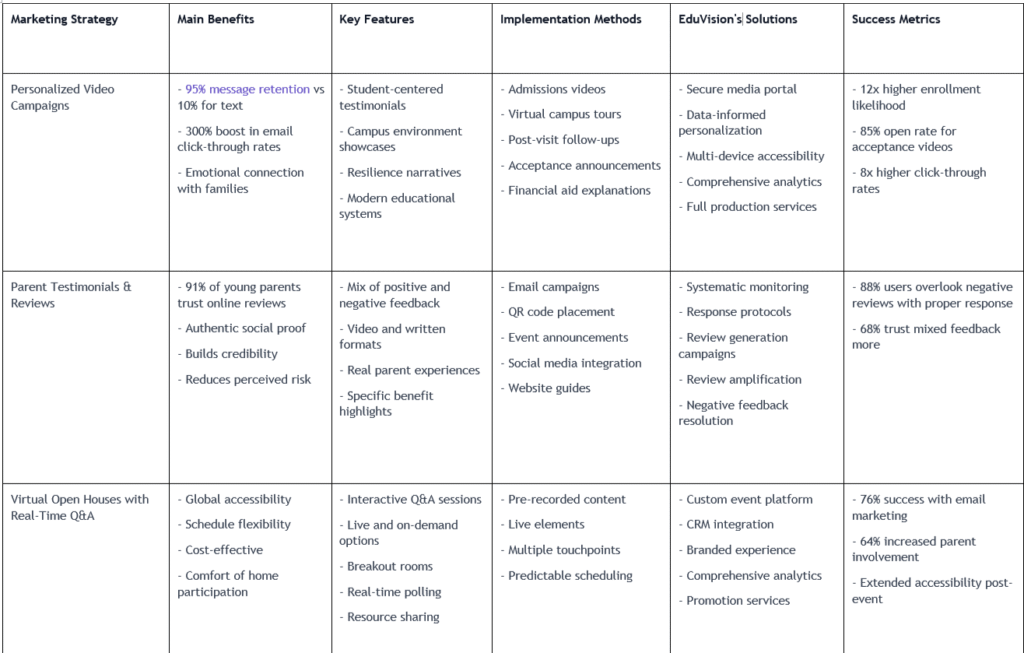
| Approach | Best for | Effort | Main benefit |
|---|---|---|---|
| Personal video | Following up on inquiries | Low to medium | Warm, personal first impression |
| Parent testimonials | Building trust and credibility | Low | Social proof from real families |
| Virtual open houses | Reaching distant or busy families | Medium | Live connection and real answers |
Most schools benefit from using all three together. Video starts the relationship, testimonials build trust and open houses move families to action.
What does this look like for a small private school?
Here is an illustrative example. A private primary school with about 180 students has strong teaching but flat enrollment. Its website lists programs that look much like those of three nearby schools.
Over one admissions season, the team tries a simple plan:
- Month one. The admissions lead records a short welcome video and a two-minute campus walk-through on a phone. Both go on the admissions page and in inquiry replies.
- Month two. The school asks ten happy families for a short written quote and a review on Google Maps. Five agree to a photo.
- Month three. It runs its first virtual open house, with the head of school, two teachers and a parent panel.
- End of season. The team reviews which inquiries became tours and applications, and asks new families what helped them decide.
The curriculum stayed the same. What changed was how clearly families could see the school before visiting.
What mistakes make these methods fall flat?
- Over-produced content. Polished videos that look like adverts often feel less trustworthy than simple, honest clips.
- Scripted testimonials. Parents can tell when words were written for them. Let families speak in their own way.
- Long, one-way events. An open house that is mostly slides loses families quickly.
- No follow-up. Every inquiry, video view and event signup needs a personal next step within a day or two.
- Inconsistent effort. One burst of activity before admissions season fades fast. Small, steady effort works better.
How should international and online schools adapt these methods?
International schools often serve families who speak several languages and live in different time zones. Add subtitles to key videos, schedule open houses at two times and include testimonials from families of different backgrounds.
Online schools have no campus to tour, so video carries even more weight. Show a real live lesson, the learning platform and how teachers support students day to day. Our guide to online school marketing covers more ideas for reaching families at a distance.
How do you know it is working?
Track a few simple measures each admissions season:
- Inquiry to tour or event attendance rate.
- Event attendance to application rate.
- Number and rating of new reviews.
- Video views and email click rates.
- What new families say when asked how they found you.
Compare results over time and keep what works. For more ideas, see our guide to private school marketing strategies.
Do current families matter too?
Yes. The same methods that attract new families also keep current ones. Personal communication, visible parent voices and open Q&A sessions help families feel heard. Strong parent engagement and retention feeds the word of mouth that brings in your next class.
In my work with schools, the ones that stand out are rarely the ones with the most programs. They are the ones families feel they know before they ever visit.
Get support with your school marketing
EduVision helps private and international schools sharpen their message, build trust with families and grow enrollment. Learn about our school marketing and digital presence services or contact EduVision to start a conversation.
Frequently asked questions
Can a school stand out without new programs?
Yes. Many schools grow by communicating existing strengths more clearly through video, testimonials and personal events.
How long should school admissions videos be?
Keep most clips between 30 seconds and two minutes. Longer tours or leader Q&A videos can run a few minutes if they stay focused.
How do we get more parent reviews?
Ask at positive moments, make it easy with direct links or QR codes, and remind families during events and in newsletters.
Are virtual open houses still worth it?
Yes, especially for relocating, international or busy families. They complement in-person visits rather than replace them.